Tuesday, November 24, 2020

World’s longest drift in an electric vehicle! Porsche Taycan sets Guinness World Record


 A smooth drift is perhaps one of the coolest manoeuvres to pull off in a car and if you manage to do a long one, the spectators go wilder. But we’re not so sure if the enthusiasm would last for over 42 km. Porsche instructor Dennis Retera did 210 laps of a 200 m long drift circle in a Porsche Taycan. In a drift that lasted for 55 minutes, the sideways slide expert set a new Guinness World Record for the longest drift in an electric vehicle. The average speed was 45.6 km/h. The record was achieved with the rear-wheel-drive version of the Taycan, which is already on sale in China.

“When the driving stability programmes are switched off, a powerslide with the electric Porsche is extremely easy, especially of course with this model variant, which is driven exclusively via the rear wheels,” says Dennis Retera. “Sufficient power is always available. The low centre of gravity and the long-wheelbase ensure stability. The precise design of the chassis and steering allows for perfect control at all times, even when moving sideways.”

The attempt took place under the supervision of Guinness World Records official record judge Joanne Brent on the irrigated driving dynamics area of the PEC. Brent has been supervising record attempts of all kinds for Guinness World Records for over five years.

Porsche Taycan, the German manufacturer’s first electric car, also has other records to its name – a 24-hour endurance run over 3,425 km on the high-speed track in Nardò, the best time in its class of 7:42 minutes on the Nürburgring-Nordschleife, the 26 sprints from a standing start to 200 km/h at the airfield in Lahr.

Monday, November 23, 2020

General Motors to boost its electric vehicle spending, adds $7 bn more


 General Motors announced late last week that it would spend $27 billion on autonomous and wholly electric vehicles through 2025. This notes an increase of $7 billion from the Detroit automaker's initial announcement earlier in March 2020. This 35% increase from the earlier investment plan is sure to assist General Motors reach its lofty goal of releasing 30 new electronic vehicles by 2025.

The majority of General Motors’ new vehicles are set to feature the company’s latest Ultium batteries. These batteries are unique in the automobile industry due to its pouch-style cells being able to be stacked horizontally or vertically inside the battery pack. Engineers are thus able to optimise the layout and energy storage for each vehicle design.

With ranges of up to 450 miles, which goes even further than Tesla’s Model S Long Range Plus unveiled in June 2020 with a 402-mile range, General Motors’ numbers surrounding its electric future have improved in many regards. General Motors expects this level of efficiency to bring the price of its electric vehicles in-line with the company’s current gas-powered offerings by the middle of this decade.

Recently, BlackRock, the world’s largest investment manager, said that this year saw investors allocating more than twice as much money in its funds that invest in climate change. BlackRock’s CEO, Larry Fink, commented on whether and how companies approach social, governance, and environmental issues has become imperative for investors.

Saturday, November 21, 2020

Electric Vehicle Interest Surges 500% In UK On News Of 2030 Fossil Fuel Car Ban


2030 is a little more than 9 years away, but news of the UK’s plan to ban sales of new gas/diesel cars in 2030 has reportedly led to a surge in interest in electric vehicles (EVs). Practically speaking, there’s one decent reason for that, but the core reason is probably just increased awareness that electric vehicles are becoming mainstream and will eventually take over the market — something that is extremely old news to CleanTechnica readers but still largely unknown to the broader public. Helping the public to learn that the future (the medium-term future even) is electric leads to many more people thinking about their existence and viability right now.

Among other things, this just shows the power of strong country targets.

According to BuyaCar.co.uk, electric vehicle inquiries increased by 500% following the news of the stronger timeline. The website, which has more than 60,000 cars available for sale, saw searches for electric cars rise from about 300 a day to “1,679 in the 24 hours following Boris Johnson’s announcement.” They represented 6.5% of vehicle searches in the previous 30 days, and then 10.3% in the day following the announcement from UK Prime Minister Boris Johnson.


UK plugin vehicle sales rose above 12% in October (6.6% fully electric/BEV share), and was above 9% in the first 10 months of 2020 (5.5% BEV share). If a five-fold increase in EV interest translated to a five-fold increase in plugin vehicle sales, we’d see rocket grow to around 50% of the UK’s auto market! Of course, a search surge in 24 hours after a major national announcement does not mean sales will follow the same surge in interest. However, it’s a good sign — growth in consumer exploration of the superior technology should lead to an increase in sales.

Also noteworthy, being a used vehicle site, BuyaCar.co.uk does not see the interest in electric vehicles that the new car market sees. The company shares that not even 1% of its 2020 sales of used cars were full electrics.

Naturally, electric vehicles benefit from instant torque, a completely smooth & quiet powertrain, zero emissions, a simple powertrain that results in very low cost operation and much less maintenance, and the glamor of new tech.

One of the biggest advantages of a good electric car is that it holds its value well — something demonstrated over and over again, especially when it comes to Tesla models. As noted at the top, there is also a practical reason for a surge in interest following the 2030 ban announcement — gas and diesel cars could really see high depreciation as we get closer to 2030. If someone wanted to avoid being stuck with a used fossil fuel vehicle that had depreciated a great deal, resulting in a high total cost of ownership, it seems that it would be smart to go electric sooner rather than later.


BuyaCar.co.uk focused on the fact that the vast majority of buyers are still buying diesel and petrol cars, especially on the used market. While the crew there may think it’s for logical reasons, I would argue that it’s mostly due to cultural inertia, psychological inertia, and limited availability. All of those barriers can be overcome rather swiftly, especially considering the pace of change in the new-car market. The good news is that people seem to have an increasingly open mind about the new powertrain (which isn’t actually new, but that’s a story for another day). Even the BuyaCar.co.uk team seemed open minded about the transition, despite being probably less optimistic about the growth potential than you or I am.

“However, there is clearly a long road ahead for the government to ensure sufficient — and affordable — electric new cars, especially given that the overwhelming majority of motorists still aim for petrol or diesel,” BuyaCar.co.uk wrote. “Now, with searches for electric cars suddenly breaking through the 10% mark in the wake of news that all new car drivers will have to have one in 10 years, it will be interesting to see if this translates into increased sales.”

It will be interesting indeed.

2020 Fiat 500e - Totally Redesigned

To close out, aside from the many UK EV sales articles we’ve published, these are a dozen top stories about UK electric vehicles from just the past 4 months that I think are worth exploration:

  1. This Is Why Electric Car Sales Are Blowing Up In The UK
  2. MG On Track To +50% Plugin Vehicles In 2021
  3. Fiat & Kaluza Team Up For Greener & Cheaper Charging In UK
  4. Police Scotland Buys 180 Hyundai Kona Electrics
  5. Octopus Energy & Audi UK Offer ~5,000 Free Miles Of Charging & Free Wallbox
  6. Tesla Model 3 Wins UK AutoTrader’s New Car Of The Year Award, Is Reminiscent Of “When The iPhone First Came Out”
  7. Anti-Tesla Talking Point Crushed By UK Survey — Tesla Model 3 Is Reliability King
  8. Kids Get Parents To Buy Electric Cars
  9. Oil Giant Total Buys London’s Largest EV Charging Network
  10. You Can “Subscribe” To A Renault Zoe EV In UK — Onto Orders 1,100 More
  11. Electric Vehicles Cheaper Than Diesels For Uber Drivers In Many European Capitals
  12. Uber Working With Renault & Nissan To Electrify Transport In Europe


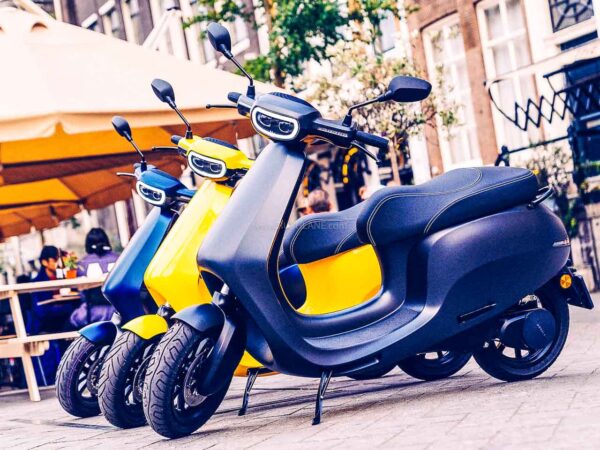
Ola Electric Scooter India Launch Likely By January 2021


 Ride-hailing major Ola is venturing into the electric scooter retailing with the first vehicle likely to launch soon. As per a report by PTI, Ola Electric is expected to launch its first electric scooter by January next year. This comes after the recent development of Ola looking to start manufacturing electric scooters in India. 

Ola-Etervo BV Tie Up These scooters will initially be manufactured at a facility in Netherlands and will be sold in Europe as well as India. For reference, in May this year, Ola announced the acquisition of Amsterdam-based Etergo BV for an undisclosed amount which bolstered its design and engineering capabilities. 

 As of now, there has been no official word from Ola regarding the current development. Developed as an all-electric state-of-the-art App scooter, Etergo BV uses swappable high energy density batteries to deliver a range of up to 240 Km. The company has had developmental experiences with leading automotive brands such as Tesla, General Motors, BMW, Jaguar and Ferrari in the past. 

 The new Ola Electric Scooter is expected to be priced competitively against its fossil fuelled counterparts and the brand is looking to tap into majority of 20 million units of the Indian two-wheeler market. Some sources convey that Ola intends to sell at least a million e-scooters in India in its first year. 


Ola Electric Scooters Made in India Etergo electric scooter Ola’s Future EV Plans Ola is currently in talks with various state governments to set up an electric scooter manufacturing facility in India. This facility is slated to be the largest two-wheeler manufacturing facility in the country with an annual production capacity of 2 million units.

 This move to manufacture and retail electric scooters might pitch the SoftBank-backed brand as a worthy business opponent to Ather Energy, Hero Electric, Okinawa, Bajaj Auto and others which offer e-scooters in India. Plus it seems the right time for companies to venture into a business that has been extensively promoted by Central and several state governments by offering lucrative incentives. 

 Future holds bright prospects electric vehicles (EV) in India and Ola might want to utilize this opportunity to expand its avenues. The shared mobility industry took a huge hit this year after the outbreak of novel coronavirus which shrunk the business. In the near future as well, people will prefer owning a vehicle rather than sharing mobility. Hence, it is imperative for Ola to venture into some other business that might return some great numbers. 

 As per our previous report, production for electric scooters in India is targeted to commence in the next 18 months by Ola. The manufacturing site is expected to adopt Industry 4.0 philosophy and will use solar power and will have test tracks. 

Friday, November 20, 2020

General Motors’ electric vehicle plan just got bigger, bolder, and more expensive


 General Motors announced Thursday that it was dumping more money into its electrification plans and would also be accelerating its production to release more electric vehicles sooner than expected.

Speaking at a conference hosted by the British bank Barclays, GM CEO Mary Barra said the company would spend $27 billion on electric and autonomous vehicles through 2025 — up from the $20 billion it announced before the COVID-19 pandemic. Also by 2025, GM will launch 30 new electric vehicles around the world, more than two-thirds of which will be available in North America. The vehicles will span GM’s entire brand portfolio, including Cadillac, Buick, GMC, and Chevrolet, and will come in a range of prices.

Previously, the company said it would release 20 new EVs by 2023, though most of those were expected to launch in China, where demand for electric vehicles is much higher thanks to strict emissions rules.

GM has unveiled two new EVs in the last few months: the Cadillac Lyriq SUV, expected to go into production in late 2022, and the GMC Hummer EV, slated for late 2021. But the auto giant has been criticized for bringing vehicles to market too late, while other automakers are racing to get their EVs to customers much sooner.

“Climate change is real, and we want to be part of the solution by putting everyone in an electric vehicle,” Barra said in a statement. “We are transitioning to an all-electric portfolio from a position of strength and we’re focused on growth. We can accelerate our EV plans because we are rapidly building a competitive advantage in batteries, software, vehicle integration, manufacturing and customer experience.”

The news is meant to convince those investors on Wall Street who have been jittery about GM’s ability to catch up to Tesla, which has been the only automaker to successfully build an EV business over the last few years. Meanwhile, legacy automakers are stepping up their own EV plans, with Ford expecting to begin delivering its Mustang Mach-E SUV to customers by the end of the year and Volkswagen going into production on its electric ID 4 SUV early next year.

GM also said it was bolstering its estimates about its scalable Ultium battery architecture thanks to “engineering advances.” The automaker now says it anticipates getting 450 miles of range out of its Ultium batteries on a full charge, up from the previous estimated range of 400 miles.

The company said it was already working on the second-generation version of Ultium, which is projected to deliver “twice the energy density at less than half the cost of today’s chemistry.” GM said that this next-gen version of Ultium will cost “60 percent less” than batteries in use today. The company is prototype testing this next-generation battery technology, which is expected to be available mid-decade. 

Wednesday, November 18, 2020

Electric car batteries: the fact


Hailed as a route to a green, carbon-free future, electric car batteries have the world's superpowers vying for a share of what promises to be a lucrative market. 

But lithium-ion batteries are not without their environmental and ethical drawbacks -- here's what you need to know about the fast-developing technology.

- Driven by lithium - Electric vehicles, or EVs, have an electric motor rather than an internal combustion engine. They may be powered by fuel cells that generate electricity from hydrogen or a lithium-ion rechargeable battery pack.

Each cell in the battery pack contains a positive electrode, usually containing lithium and cobalt, and a negative electrode containing graphite.

As atoms move between the cell's electrodes they create power which drives the motor.

Electric vehicles create little noise, no pollution where they are used, and require less maintenance as they have far fewer moving parts than internal combustion cars.

- Europe's battery roadmap - The electric vehicle market is accelerating fast as consumers look for greener alternatives to petrol and diesel, and the European Commission predicts the number of EVs on the road will rise ten-fold to 200 million by 2028.

Batteries make up about 40 percent of the value of an electric car, and China currently controls two-thirds of worldwide cell manufacturing.

But the EU hopes to increase its share from the current three percent to 25 percent by 2028.

Last year the bloc approved 3.2 billion euros of state subsidies from France, Germany, Finland, Sweden, Italy, Belgium and Poland to stimulate a European battery industry and meet homegrown demand.

So far plans for a number of giant European "gigafactories" have been unveiled, including a colossal Tesla plant in Germany and a $1bn facility in Sweden part-funded by Volkswagen.

- A green illusion? - Unlike petrol or diesel vehicles, electric cars do not spew out emissions as they move about.

But the batteries come with their own share of green shortcomings, in the first instance because charging the batteries requires electricity which may be created by coal-fired or nuclear power stations.

Mining the battery chemicals also has a significant environmental impact, which can cause toxic substances to leak into waterways.

The batteries have a human cost too -- over half of the world's cobalt, a key battery ingredient, currently comes from mines in the Democratic Republic of Congo, where organisations such as Amnesty have documented rights abuses and the use of child labour.

Meanwhile battery recycling opportunities are still limited and some industry watchers warn that global supplies of cobalt are already running low and won't stretch to meet future demand.

- A long road ahead - Battery technology still has room for development -- the cells take a long time to charge, are expensive to produce and the distance you can drive in one go is limited.

But this September Tesla announced advances that it said will allow it to slashing battery manufacturing costs to speed a global shift to renewable energy, and could have a $25,000 self-driving model available in around three years.

Meanwhile US maker GM unveiled its plans for fast-charging Ultium batteries in March, with a range of up to 400 miles (645 kilometers).

While battery electric vehicles have dominated in recent years, there has recently been renewed interest in fuel cells. These convert hydrogen into electricity, emitting nothing but water vapour. They offer longer range and are fast to refuel, but like battery electric vehicles are currently expensive to produce and would require huge investments in developing refueling infrastructure. 

Tuesday, November 17, 2020

Germany to extend electric car subsidies to 2025: Sources


Germany will extend its enviromental subsidy for electric cars until 2025, government and auto industry sources told Reuters on Monday, a day ahead of a German auto industry summit in Berlin.

In June, Germany doubled incentives for electric cars, which comprised of a 3,000 euro bonus for electric and a 2,250 bonus for hybrids costing below 40,000 euros.

The increased bonus will now be extended beyond 2021, but lowered in two steps until 2025, the sources said. The extra bonus for hybrids could be scrapped altogether from 2022.

For customers, the government environmental bonus can be topped up with a 3,000 euros manufacturer stipend.

Germany's economics ministry declined to comment on the details but a spokeswoman said Economics Minister Peter Altmaier had advocated extending the subsidies.

A scrappage scheme for older diesel trucks will also likely be approved, at the automotive summit in Berlin, the sources said.

Electric cars made up 1.8% of new passenger car registrations in Germany in 2019.